Cost of Living Pressure? Here's How We Can Help

The cost of living gets complicated when repayments, bills and a tax debt all land at once. We can help you look at the tax, the loan and the cover together, and work out what to deal with first.
You're not alone. In 2024-25, lenders across Australia received more than 280,000 hardship requests.
In short
- We can bring overdue tax returns and business activity statements (BAS) up to date, then set up a payment plan with the ATO.
- We can check whether your home loan is still on a competitive rate, and look at refinancing.
- We can review your insurance with you before you cut cover you might need.
- Our free Cost-of-Living Budget shows where your money goes, and gives you up to four actions for this week.
- If you ask your lender for hardship help, they have to give you a decision.
How we can help
One conversation can cover the tax debt, the loan and the insurance together. Each one affects the others, so it helps to look at them side by side.
Tax debt and overdue lodgments
We can bring your lodgments up to date, work out what you owe and set up a payment plan with the ATO. The general interest charge on unpaid tax is 11.51% a year for October to December 2026. From the 2025-26 income year, it's also no longer tax deductible. That makes a tax debt a poor one to leave until last. Read more about falling behind on tax and why ATO debt is getting more expensive, or see our accounting and tax services.
Business cash flow
If the business is the pressure point, our bookkeeping team can show where the cash goes each month and what's coming. Where a loan would help, our business finance team can look at the options. Our business stress test is a good place to start.
Home loan repayments
If your repayments have gone up, it's worth checking whether you're still on a competitive rate. Rates vary between lenders and between loans, so compare yours with what lenders offer new customers. We cover this in the loyalty tax. See what rates at a 15-year high mean for you, or talk to our team about refinancing.
Budget and spending
A budget is about timing as much as cutting back: what comes in, what goes out, and when. Our free Cost-of-Living Budget, below, is the quickest way to start. Our financial planning team can then help you build a longer-term plan around it.
Insurance
Before you cut cover, we can review it with you. The waiting period and other features change the cost, so the same protection can sometimes cost less when it's set up differently. Read whether income protection is still worth the premiums and our guide to personal risk management, or see our insurance services.
Start with our free Cost-of-Living Budget
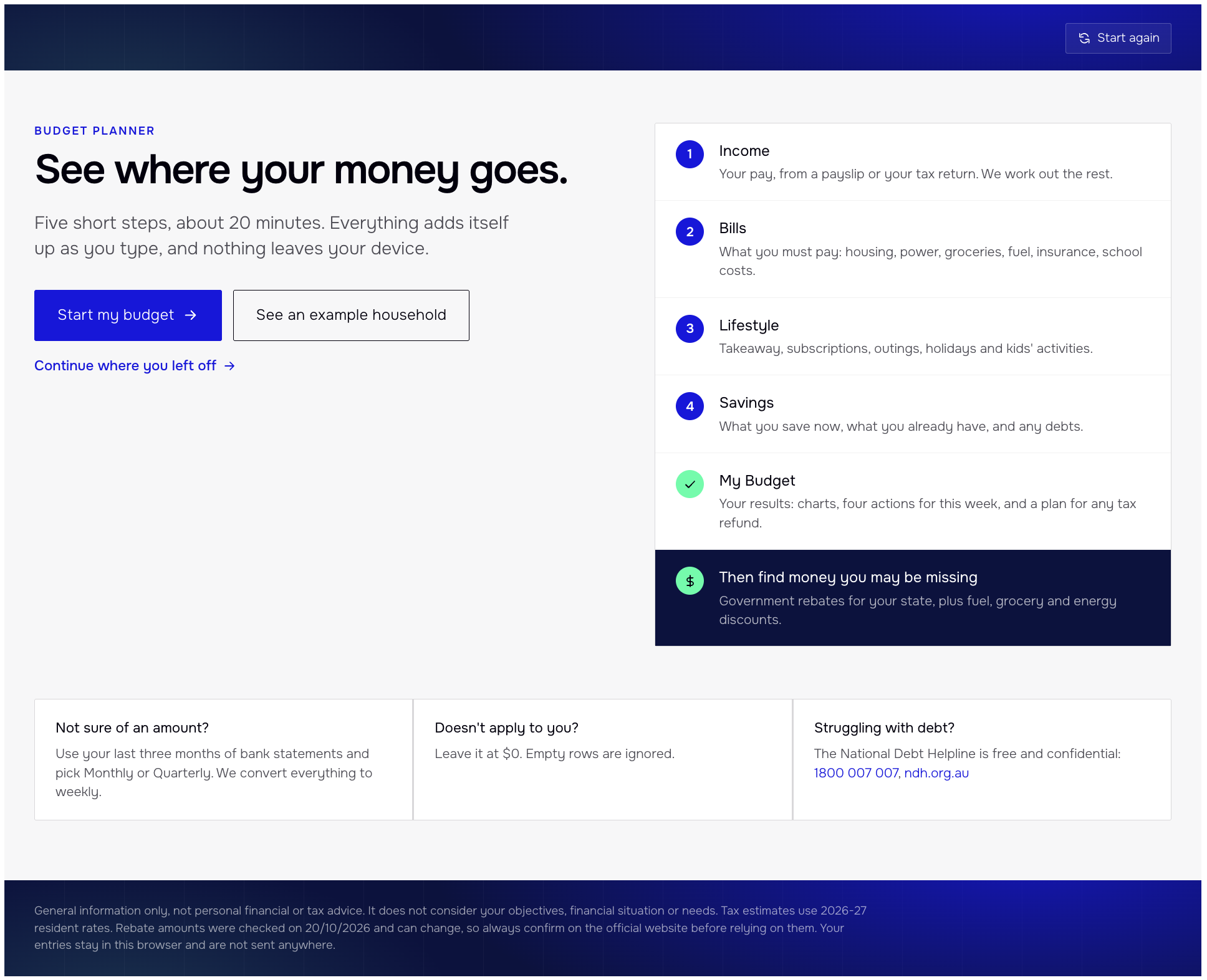
Every decision below is easier once you know your numbers. Our Cost-of-Living Budget is free and takes a few minutes. You come away with a plan, not just a total.
Why it's worth a few minutes
- You see where your money actually goes. Bills, lifestyle spending and savings side by side.
- You see how stretched your bills are. It shows what share of your take-home pay your bills take.
- You get up to four actions for this week. Plain steps worked out from your own numbers.
- It finds money you may be missing. Government rebates and concessions and discounts.
- It checks your mortgage rate. If there's a gap, it estimates what that's worth each year.
- It plans your tax refund. If you're expecting one, it shows what to put it towards first, starting with overdue bills.
- Your numbers stay with you. Nothing leaves your device, and there's no sign-up.
How to get the most from the calculator
Have your last three months of bank statements handy. Enter amounts monthly or quarterly, and it converts them to weekly. Leave anything that doesn't apply at $0. If you'd like to see it in action first, you can open an example household.
Once you have your numbers, bring them to a free discovery call and we'll look at the whole picture. For more on budgeting, read why budgeting is about cash flow and how to regain control over lifestyle inflation.
Which bill to deal with first
When money's tight, the order matters. This is the order that tends to cost the least:
- Lodge what's due, even if you can't pay. Lodging and paying are separate, so you can lodge on time even if you can't pay yet. A failure to lodge penalty can be added on top of the debt.
- Talk to your lender before you miss a payment. Ask for a hardship arrangement, such as lower repayments for a while, a short pause, or a change to your loan term. You can ask by phone or in writing. Once they have what they need, they have 21 days to give you a decision.
- Set up an ATO payment plan. If you owe $200,000 or less, you can often set one up yourself through myGov or Online services for business, or we can set it up for you. Interest keeps building, so a plan you can keep beats a big first payment you can't.
- Review your insurance before you cancel it. Income protection and life cover are often the first to go. Replacing them later means applying again.
- Then build the budget. With the urgent calls made, the Cost-of-Living Budget shows what's left each week and where it should go.
If your lender says no to a hardship request, they have to tell you why. You can complain to the lender first, then to the Australian Financial Complaints Authority, which is free.
Buy now pay later providers have been regulated as credit since 10/06/2025, so you can ask them for hardship help too.
An example
This example is made up to show how the pieces fit. It isn't based on a real client.
Sam is a self-employed electrician. Work slowed over winter, and Sam fell behind on tax. There's now an ATO debt of $18,000 from last year's return and two BAS. The home loan repayment has also gone up by $400 a month.
Sam's first instinct is to stop the income protection premiums, hold off lodging the next BAS and wait for a big job to come in. Each of those would make things worse.
Here's how the order plays out instead:
- Lodge the overdue BAS. That avoids a failure to lodge penalty on top of the debt.
- Call the lender. Ask about a short hardship arrangement, and check whether the rate is still competitive.
- Set up an ATO payment plan. At $18,000, Sam can usually set it up online, over a period Sam can actually keep up.
- Keep the income protection. For a sole trader, it's the cover that pays if Sam can't work.
- Set up a simple cash flow forecast. Know when the quiet months are coming, so next year's tax is put aside as the money comes in.
Free help outside Ledgersmith
- National Debt Helpline: 1800 007 007, free, confidential counselling.
- Small Business Debt Helpline: 1800 413 828, free counselling for business owners.
- Moneysmart: ASIC's free guides on hardship, debt and budgeting.
- ATO payment plans: set one up online yourself.
- Australian Financial Complaints Authority: free if your lender refuses help and you think they've got it wrong.
Watch for scams
Scammers target people under money pressure. Offers to "wipe" your debt, unlock your super early or fix your credit score for a fee are common. Read how to protect your super from scams, and never share your myGov or banking login with anyone who calls you.
Talk to us early
If the pressure is building, a conversation now gives you more options than one in three months. Book a free discovery call and we'll look at the tax, the loan and the cover together.
This is general information only. It doesn't take into account your objectives, financial situation or needs, and it isn't financial, tax or legal advice. Consider whether it's right for you, or talk to us, before acting on it.


The Widow Tax, the Death Tax, and What Really Happened